
Voltage Stabilizer & Regulator
Ensuring precise voltage regulation and stable power supply for reliable electrical equipment performance across industrial and testing applications
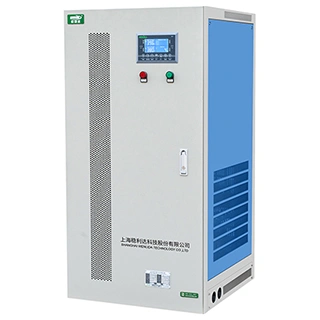
Servo motor-controlled voltage regulator for protecting against mains voltage fluctuations and delivering constant voltage for electrical equipment
- Rated capacity: three-phase 10–3600 kVA, single-phase 10–150 kVA
- Phase number: single-phase or three-phase (optional)
- Input voltage: three-phase 380 V (± 20 %), single-phase 220V (±20 %) (customizable upon request)
- Output voltage: three-phase 380V, single-phase 220 V (customizable upon request)
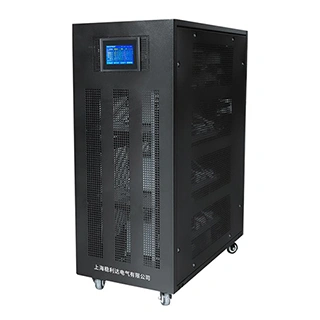
Solid-state voltage regulator for maintenance-free voltage stabilization and delivering highly stable output voltage for electrical equipment
- Rated capacity: three-phase 10–1600 kVA, single-phase 3–50 kVA
- Phase number: single-phase or three-phase (optional)
- Input voltage: three-phase, five-wire 380 V (± 15%), single-phase 220 V (± 15 %) (customizable upon request)
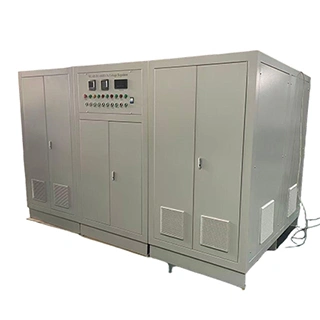
Continuously adjustable contact voltage regulator for testing, laboratory, and industrial power applications
- Rated capacity: 50–1000 kVA (other capacities can be customized upon request)
- Phase number: single-phase or three-phase (optional)
- Rated input voltage: 220 V / 380 V (other voltages can be customized upon request)
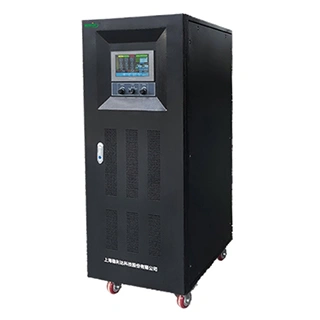
Frequency converter power supply for adjustable voltage and frequency in global power compatibility and testing applications
- Rated capacity: 3–1000 kVA
- Input phase number: single-phase, three-phase (customized input phase configurations available upon request)
- Output phase number: single-phase, three-phase (customized output phase configurations available upon request)
- Rated input voltage: single-phase 220 V (± 20 %), three-phase 380 V (± 20 %) (customizable upon request)
- Rated output voltage: single-phase 0–300V, three-phase 0–520V (higher voltage ranges are customizable upon request)
In beverage or milk filling production lines, unstable voltage can lead to inaccurate filling levels and repeated downtime. Which product is recommended to prevent these issues?
An AC voltage stabilizer is the right choice for filling lines. The motor and metering pump in filling machines are very sensitive to voltage changes. When the voltage isn’t stable, the motor speed becomes irregular, which makes the filling volume inaccurate. In milk filling, even a small variation of ±2 ml can exceed the allowed limit, which directly affects product consistency. When a voltage stabilizer responds quickly to changes in the power grid, it keeps the voltage steady, so the filling heads work at a constant speed. This steady operation helps maintain accurate filling volumes, reduces manual adjustments, and keeps the production line running smoothly.
During the start-up of welding or painting systems in automotive production, the surge in power demand might result in voltage drops, unstable equipment performance, and higher power consumption. How can these voltage drops, and power fluctuations be solved in automotive workshops?
For this type of environment, a combination of a voltage stabilizer, Static Var Generator (SVG), and laminated busbar is the most suitable solution. The stabilizer minimizes voltage drops during machine start-up, ensuring smooth and reliable operation. The SVG provides fast and accurate reactive power compensation (response time < 50 ms), which improves power factor and reduces electricity costs. Laminated busbars help distribute current efficiently within control cabinets and machines, reducing transmission losses and supporting the heavy-duty, fast-paced demands of automotive manufacturing lines.
What is the main difference between an AC voltage stabilizer and an AC voltage regulator, and where should each be used?
The main difference between an AC voltage stabilizer and an AC voltage regulator lies in their purpose. Voltage stabilizers keep the output voltage fixed within a narrow range, even when the input voltage fluctuates. For example, if the input varies by ±10% around 220 V, the stabilizer can maintain a steady output of about 220 V ±2%, ideal for equipment that requires precise and stable voltage, such as CNC machines or medical devices. A voltage regulator, on the other hand, gives more flexibility. The output voltage can be set anywhere between 0 V and 380 V, either manually or automatically, which is useful for testing or calibration work that requires variable power such as in laboratories, testing setups, or equipment calibration areas.