
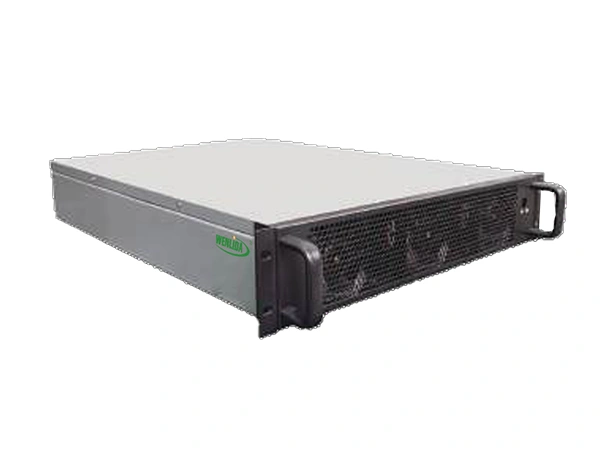


Power Conversion System (PCS)
Bidirectional power conversion system for converting and regulating the flow of electrical energy between storage batteries and the grid
- Max. Efficiency: 98.5% (full load)
- Rated power: 30kW / 50kW
- Voltage range: DC200V–800V / DC650V–850V
- Output wiring: 3W+N / 3W
- Rated voltage: AC 400V
- Voltage range: -10% to + 10%
- Output harmonics: < 3% (@ rated power)
- Overload capacity: ≤ 105% : continuous operation, 105%–110% : ≥10min operation time, ≥110%: stop operation
- Communication interface: CAN / RS 485
Request a Quote
Power Conversion Systems (PCS) are the core components in energy storage setups, often referred to as bidirectional energy converters. They manage the exchange of power between DC energy storage units, such as battery packs, and the AC grid or connected loads. Through precise control of energy flow, PCS enable two-way power conversion, grid interaction, peak shaving, and transformer capacity enhancement. In simple terms, they convert stored DC power into AC for grid use or transform grid AC back into DC to charge the batteries.
Working Principle
- Power Conversion Systems (PCS) perform bidirectional conversion between AC and DC power. In charging mode, they rectify AC electricity from the grid into DC to store energy in batteries; in discharging mode, they invert the stored DC energy back into AC and feed it to the grid or local loads. Voltage conversion between DC 650–800V and AC 380/400V is supported with a precision of ±1%.
- PCS units also regulate power dynamically, adjusting the charge and discharge levels in real time based on grid dispatch commands. This helps maintain balance in the power system by adjusting both active and reactive power, while also supporting frequency stability on the grid.
- Through CAN bus communication with the Battery Management System (BMS), PCS continuously monitor parameters such as State of Charge (SOC) and temperature. Intelligent control based on these data points allows safe and efficient charge–discharge operation, ensuring stable performance and long-term battery reliability.
Features
- PCS units use third-generation silicon carbide (SiC) semiconductors instead of traditional IGBTs, reaching conversion efficiency up to 98.8%. Power loss is reduced by around 40%, while the compact design cuts equipment size by 30–50%. They support 1500V high-voltage platforms and can be paired with energy storage containers above 6MWh. The increased energy density, about 25% higher, allows greater power capacity without expanding the system footprint.
- An optimized three-level and multi-level topology helps reduce harmonic distortion, resulting in cleaner waveforms and better power quality. The modular parallel structure allows fast switching between charging and discharging, keeping response time short and stable under changing conditions.
- String-type power conversion systems (PCS) eliminate circulating current by managing each battery cluster independently, improving balance and extending battery life. Safety is further enhanced through a multi-layer protection system with integrated AFCI arc detection and internal short-circuit monitoring, reacting within microseconds to prevent faults.
- Efficient thermal management combines liquid cooling with phase-change materials, maintaining stable operation even under harsh environments from -40°C to +70°C. Multiple input interfaces support photovoltaic, battery, and grid connections, enabling integrated solar-storage-charging configurations.
- Modular expansion allows flexible scalability, from industrial systems to ultra-fast charging stations, while the string-based design supports mixed battery use. Different battery batches can operate together smoothly, reducing upgrade costs and simplifying system maintenance.
Specifications
| Series | 30kW Series | 50kW Series | |
| DC Side | Voltage range | DC200V–800V | DC650V–850V |
| Max. DC current | 100A | 75A | |
| Max. DC input channels | 3 | - | |
| DC input power | 10kW/channel (independent or parallel operation) | - | |
| AC Side (grid-connected) | Output wiring | 3W+N/3W | 3W+N/3W |
| Rated power | 30kW | 50kW | |
| Rated voltage | AC 400V | AC 400V | |
| Rated current | 46A | 75A | |
| Rated frequency | 50Hz | 50Hz | |
| Frequency range | 47–51.5Hz | 47–51.5Hz | |
| Voltage range | -10% to +10% | -10% to +10% | |
| Power factor | 0.99 leading – 0.99 lagging | 0.99 leading –0.99 lagging | |
| Output harmonics | < 3% (@ rated power) | < 3% (@rated power) | |
| AC Side (off-grid) | Output wiring | 3W+N/3W | 3W+N/3W |
| Rated power | 30kW | 50kW | |
| Rated voltage | 400V | 400V | |
| Rated current | 46A | 75A | |
| Rated frequency | 50Hz | ||
| Voltage accuracy | 1% | ||
| Output voltage harmonics | 3% (@ linear full load) | ||
| Dynamic response | 50–100ms | ||
| Unbalanced load capacity | 100% | ||
| Overload capacity | ≤ 105% : continuous operation 105%–110% : ≥10min operation time ≥110%: stop operation | ||
| Operating environment | Operating temperature | -20℃ to +55℃ (derating required above 45°C) | |
| Storage temperature | -20℃ to +70℃ | ||
| Relative humidity | 0–95% RH, non-condensing | ||
| Altitude | Derating required above 3000m (at 45°C, derating by 1% for every 100m increase) | ||
| Noise level | < 70dB | < 75dB | |
| Communication | Communication interface | CAN / RS 485 | |
| Communication protocol | CAN / ModBus RTU | ||
| Protection level | IP 20 (with internal three-proof coating) | ||
| Cooling method | Air cooling with intelligent fan speed control | ||
| Max. efficiency | 98.5% (full load) | ||
| Dimensions | 482×620×86 | 440×220×600 | |
| Weight | 20kg | 40kg | |
Applications
-
 Mobile Energy Storage
 -
 AC/DC Microgrids
 -
 Multi-Port Energy Routers